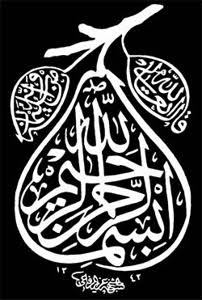
Calligrapher of the Rifāʿī order
Muhammad Abdulaziz al-Rifāʿī
known as Hattat Aziz Efendi
محمد عبد العزيز الرفاعي
An Ottoman calligrapher who worked at the office of the Şeyhülislam in Istanbul and taught at several schools. He belonged to the Rifāʿī order, which is why he signed his works “Sheikh.” He trained under Ahmed Ârif Efendi of Plovdiv and at the Hat Mektebi, graduating in 1894.
His Rifāʿī teacher was Kenan Rifâî, who counted him among his students. Aziz Efendi wrote two of his teacher's poems — one for Sünbül Efendi, one for Merkez Efendi — as large panels placed at the heads of those saints' cenotaphs.
King Fuad I of Egypt invited him to Cairo to write a copy of the Qur'an. He stayed to teach, helped found schools, and returned to Istanbul in 1932. He wrote in thuluth, naskh and jalī thuluth, and also practised marbling (ebru) and illumination (tezhip). IRCICA's international calligraphy competition, held every three years since 1986, took his name for its thirteenth edition.
- Born 1289 AH / 1872; to Cairo in 1922; twelve copies of the Qur’an
- Born 1871; to Cairo in 1921; eleven copies of the Qur’an
Works on this site